












Discover Primal Origins Shop Now

Based on Clinical Research

Sponsored Content

9 out of 10 adults over 45 already have hidden plaque in their arteries — and almost no one tells them

What two decades of UCLA heart CT scans keep showing — and what almost no one is told.

Estimated 5–7 Minute Read
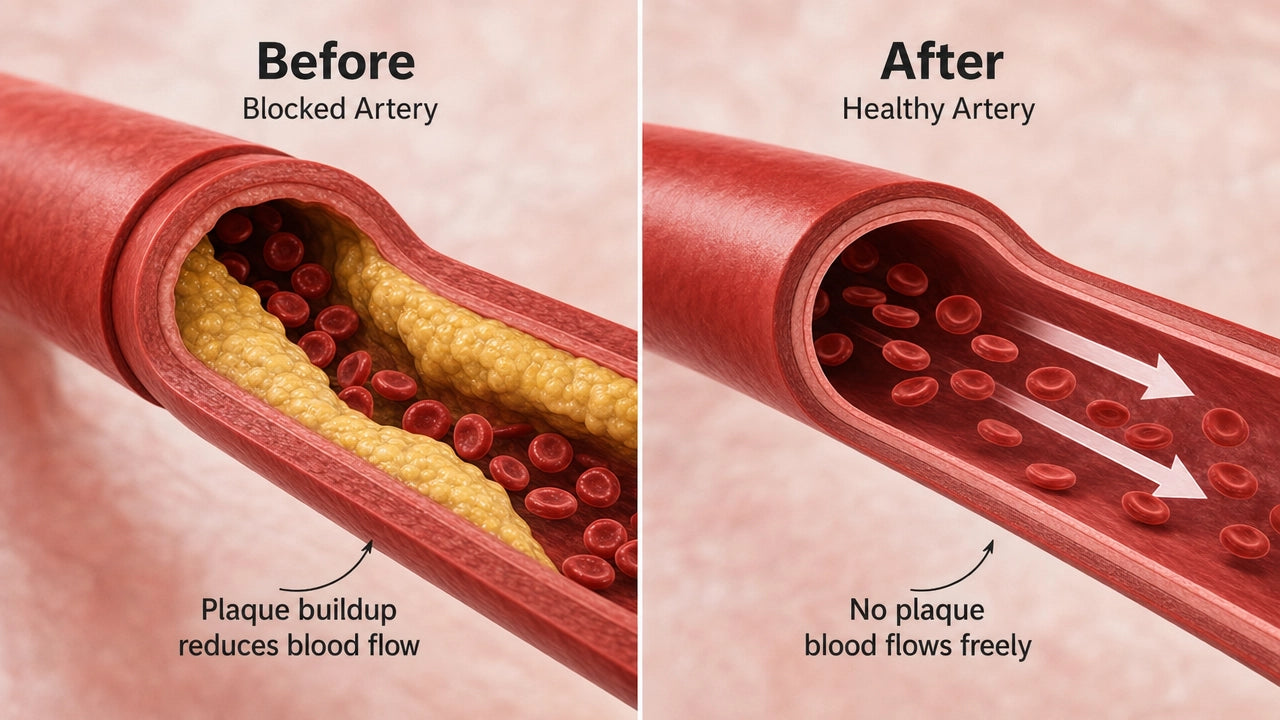
Before

Before

After

After

It was almost 1 AM when Jennifer Hayes finally typed it into Google: “swollen ankles 47 should I be worried.”

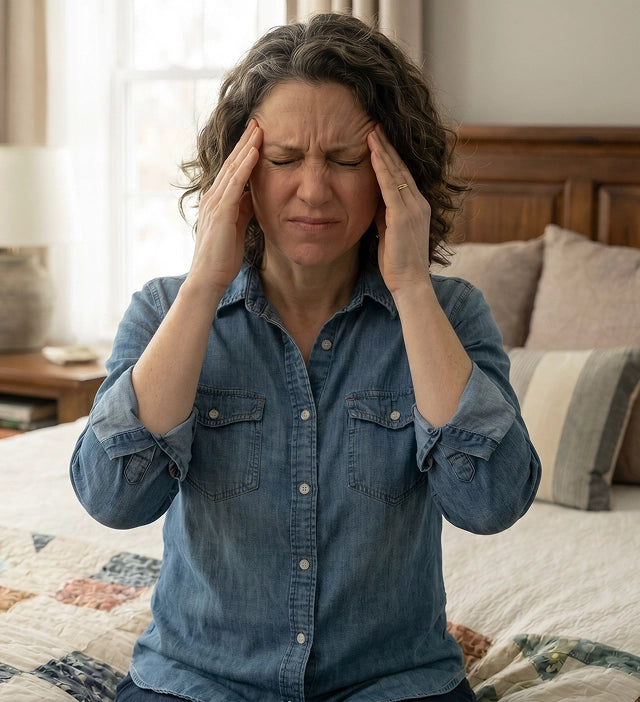
For nearly two years she’d written off the warning signs as the price of running her own remodeling crew. The 7 PM swelling that left sock marks on her calves. Hands cold even in July. The dull mid-afternoon headache that pushed her to a fourth cup of coffee. The numb leg every time she stood up from the truck cab.

That night, sitting on the edge of the bed in her Park Hill bungalow, she finally admitted what she’d been refusing to say out loud: she was scared.

“I told myself it was just the price of thirty years on the job,” she says. “But I was 47 — too young to feel this old. And I didn’t know who to ask without feeling stupid.”

What Jennifer didn’t know — and what almost no one in her doctor’s office knew — was this:

The four warning signs weren’t four problems. They were four masks for one hidden cause. A cause that’s been quietly building inside nearly nine out of ten adults her age — for decades. And it doesn’t show up on a routine cholesterol panel.

Look, The Warning Signs You Keep Blaming On Age… Aren’t About Age

Do any of these sound familiar?

  • Ankles that swell by the end of the day
  • Hands and feet that feel cold even in summer
  • Numbness or tingling in your legs after sitting
  • Persistent dull headaches without a clear cause
  • Getting winded on stairs you used to take two-at-a-time
  • A heavy, pressing feeling in your chest after meals

Most people over 45 will recognize at least three of these.

The standard playbook is to chase each one separately. A new diet for the swelling. A different supplement for the energy. More cardio. A cream for the cold hands.

But what if all of them are the same problem in different costumes — quietly building inside the same place?

What if clinical research shows that 9 out of 10 adults over 45 already carry measurable plaque inside their arterial walls? And most will never know until it’s too late?

The Silent War Inside Your Arteries

If you nodded along to even two of the warning signs above, here’s what’s really happening — usually long before any doctor mentions it.

Your symptoms aren’t random. They’re downstream of one quiet, decades-long process: the slow accumulation of arterial plaque inside the walls of your blood vessels.

Coronary Artery Calcium imaging research finds measurable plaque in nearly 9 out of 10 adults by age 45 — most of whom have never been told.

Plaque isn’t a small thing. It’s what cardiologists watch on every CT scan. It’s what they’re trying to slow down with statins.

And it’s why the four signs you just read about — swelling, cold extremities, numbness, dull headaches — show up in the first place.

Source: CAC imaging consensus, multiple cohort studies

Researchers have identified four ways arterial plaque silently sabotages your day-to-day:

  • Restricted blood flow — less oxygen reaching your hands, feet, and brain.
  • Backed-up circulation — that’s the swollen ankles by evening.
  • Nerve-feeding starvation — pins-and-needles every time you stand up.
  • Hidden inflammation — no pain, no warning, nothing on a standard test.

And here’s the part that surprises most people: plaque doesn’t hurt.

It doesn’t show up on the lipid panel your annual physical orders. Your cholesterol numbers can be “great” while the buildup adds another year.

For most adults, the first time anyone tells them is from a hospital bed. By then, the conversation isn’t about prevention anymore.

Why Diet, Statins, And Even Daily Exercise Haven’t Fixed It

You’ve probably already tried to “do the right thing.” Eat better. Walk more. Take whatever your doctor put you on. And yet the symptoms keep showing up.

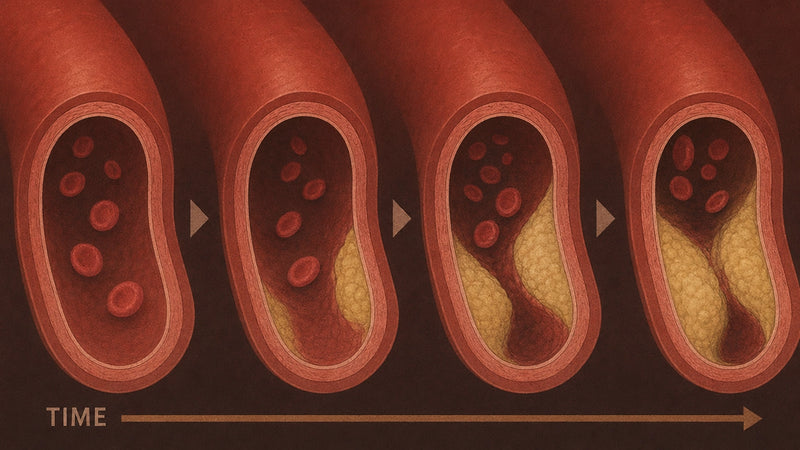
Here’s the part most people aren’t told: once arterial plaque has been building for years, it stops behaving like soft cholesterol. It calcifies — literally hardens into the artery wall. And that’s when it becomes resistant to almost everything.

Illustration of calcified arterial plaque hardening inside an artery wall

Calcified plaque is up to 5× harder to break down than the soft cholesterol most heart-health protocols are designed to lower.

That’s why so many people who feel like they’ve “done everything right” still walk into a cardiologist’s office at 55. And get told their CAC score is in the warning zone.

The standard tools are aimed at the wrong layer of the problem:

  • Statins miss the real problem targets LDL — not the calcified plaque already in your walls
  • Low-fat diets are too slow slows new buildup, but won't touch what's already hardened
  • Cardio doesn't clean arteries pushing blood through narrowed vessels doesn't clear them
  • Most antioxidants never arrive filtered out before they get near the calcified layer

None of these are bad. They’re just aimed at slowing new plaque from forming — not at reaching the calcified plaque that’s already there. To do that, your body needs a different kind of help: something the research community has been quietly studying for two decades.

The Discovery That Quietly Changed Cardiology

This is the part that surprised Jennifer — and probably will surprise you too.

For more than twenty years, a cardiology research group at Harbor-UCLA Medical Center has been quietly studying one thing.

A slow-aged form of garlic. And what it does to the calcium scores inside the human heart.

The lead researcher: Dr. Matthew Budoff.

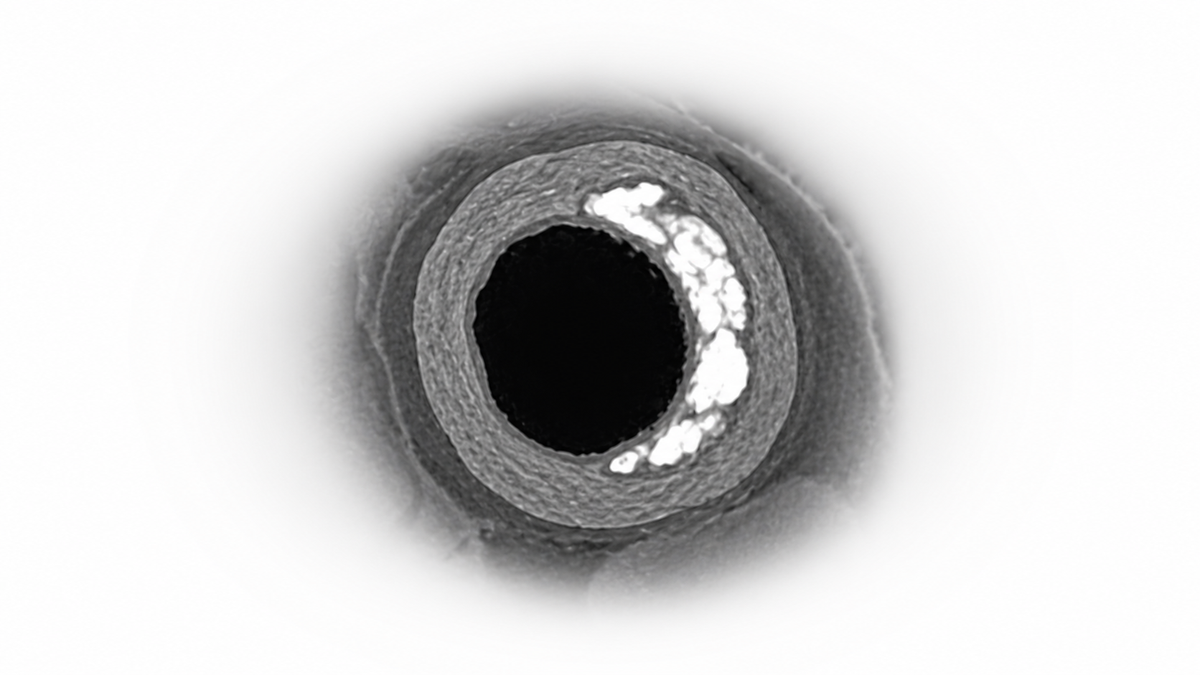
Cardiac CT imaging used in coronary artery calcium research

Their tool of choice was a heart CT scan. The same one cardiologists now consider the most accurate way to see hidden plaque inside a living person’s arteries.

Across multiple peer-reviewed trials, what they kept finding was striking enough that top cardiology journals have cited it ever since:

Peer-reviewed clinical trial

Aged garlic extract slowed coronary plaque progression — even in people already on statins

In a one-year, double-blind, placebo-controlled trial, participants taking aged garlic extract every day showed significantly less progression of coronary artery calcium than the placebo group — measured directly on cardiac CT.

  • Significantly less coronary calcium progression vs placebo over 12 months.

  • Effect held for participants already on statin therapy — i.e., on top of standard care.

  • Improved markers of arterial inflammation and homocysteine.

  • No significant adverse-event signal vs placebo across multiple trials.

Budoff MJ et al. Inhibiting progression of coronary calcification using Aged Garlic Extract in patients receiving statin therapy. Preventive Medicine, 2009. (Plus follow-up trials in J Nutr, 2016 and J Cardiovasc Dev Dis, 2020.)
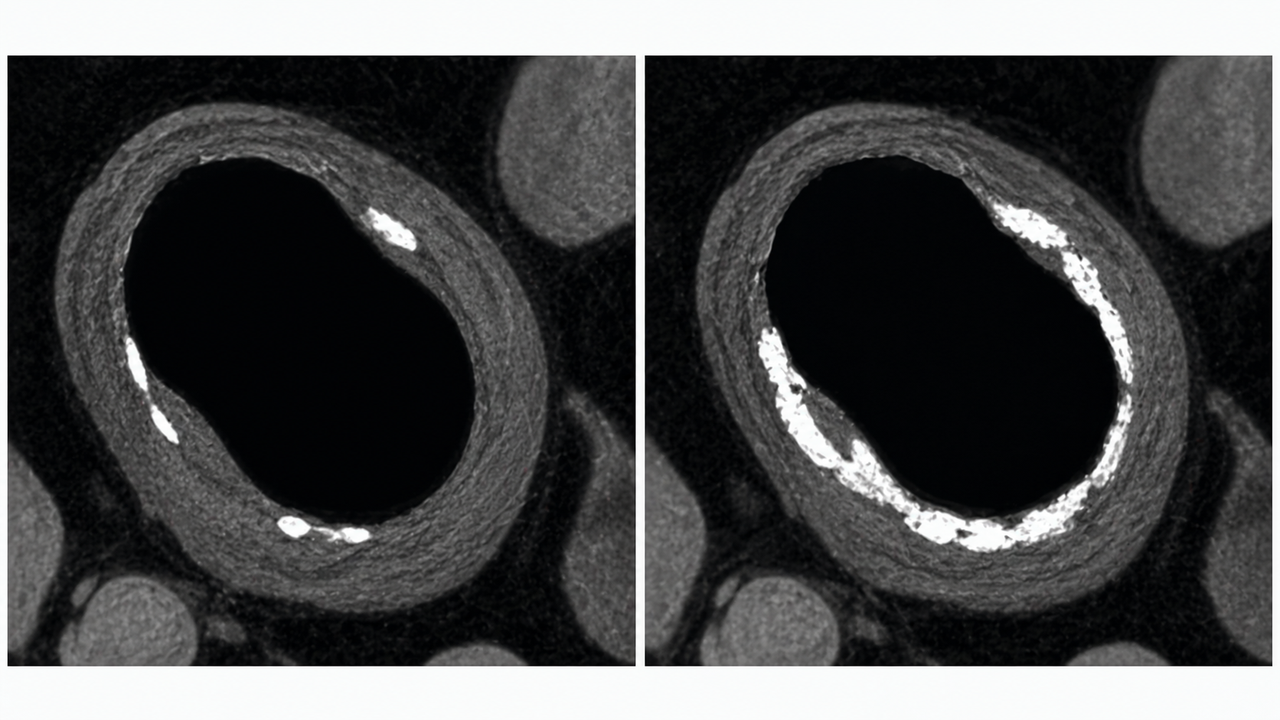
Before-and-after illustration of coronary calcium progression

The result wasn’t framed as a miracle. Budoff’s team called it a “meaningful slowing of progression.”

But here’s why cardiologists pay attention. Calcified plaque resists almost everything. Statins. Diet. Cardio. A quiet, food-derived compound did something measurable against it.

So what is it about aged garlic, specifically? That’s where it gets more interesting.

Why Aged Garlic — And Not The Garlic In Your Kitchen

Here’s the part that matters most — and the part most articles about garlic and the heart leave out.

The benefit Budoff’s team measured wasn’t coming from any garlic.

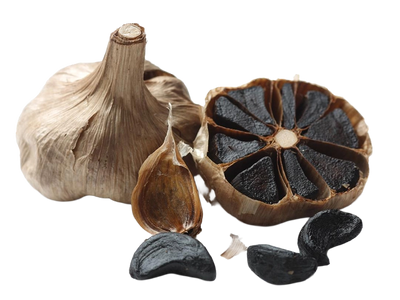
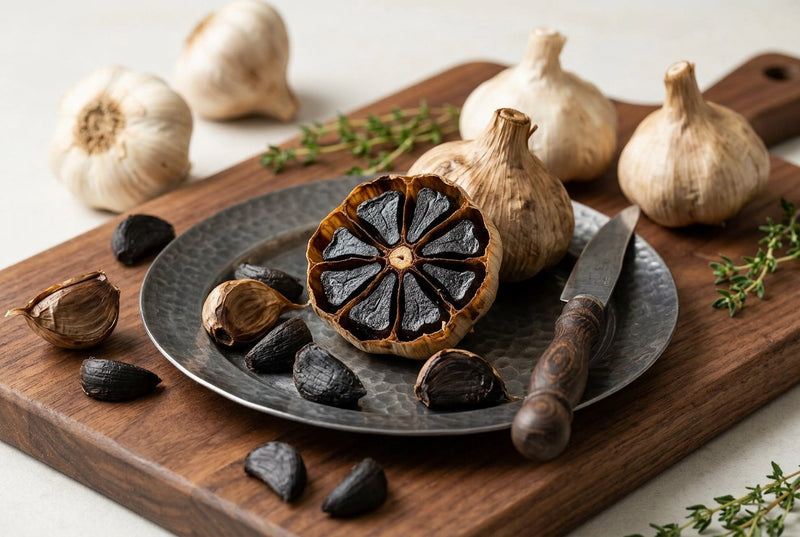
It was specifically coming from slow-aged garlic extract — garlic allowed to mature for 18 months or longer in carefully controlled conditions before it’s extracted.

Aged garlic

During those 18+ months, something quietly transforms inside the garlic.

The harsh compounds that give fresh garlic its bite (and its breath) gradually convert into stable, water-soluble compounds.

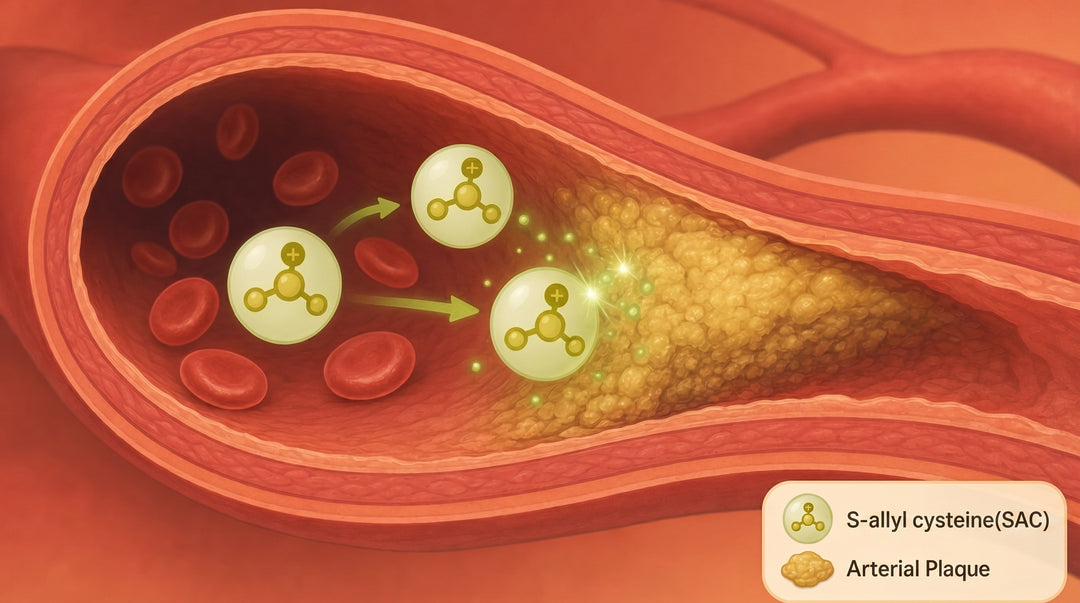
The most studied is called S-allyl cysteine, or SAC. It’s the compound the cardiology research keeps coming back to.

And here’s the catch most consumers never hear:

Fresh / Powder Garlic

Mostly contains allicin — unstable, breaks down within minutes of contact with stomach acid. Trace SAC at best.

18+ Month Aged Garlic

Allicin converts into SAC and other stable compounds. Water-soluble, survives digestion, reaches circulation in measurable amounts.

Think of it this way: fresh garlic is the spark. Aged garlic is the slow, steady ember that actually reaches your bloodstream and stays there long enough to matter.

This is why “just eat more garlic” doesn’t do what people think.

And why most off-the-shelf garlic capsules — fresh, freeze-dried, deodorized — never deliver the SAC content the studies are based on.

To match what was used in the cardiology trials, you need garlic aged the slow way. By a brand willing to wait the eighteen months.

There aren’t many.

The 18-Month Aged Garlic, Built Around What The Studies Actually Measured

This is the part that took us a long time to get right.

A real, slow-matured aged garlic — with the SAC content the research is based on. Third-party verified. Made in a GMP-certified US facility.

It turned out to be genuinely hard to source. Most suppliers wanted to ship a six- or twelve-month batch. Eighteen months ties up too much capital. Most brands won’t wait.

So we waited.

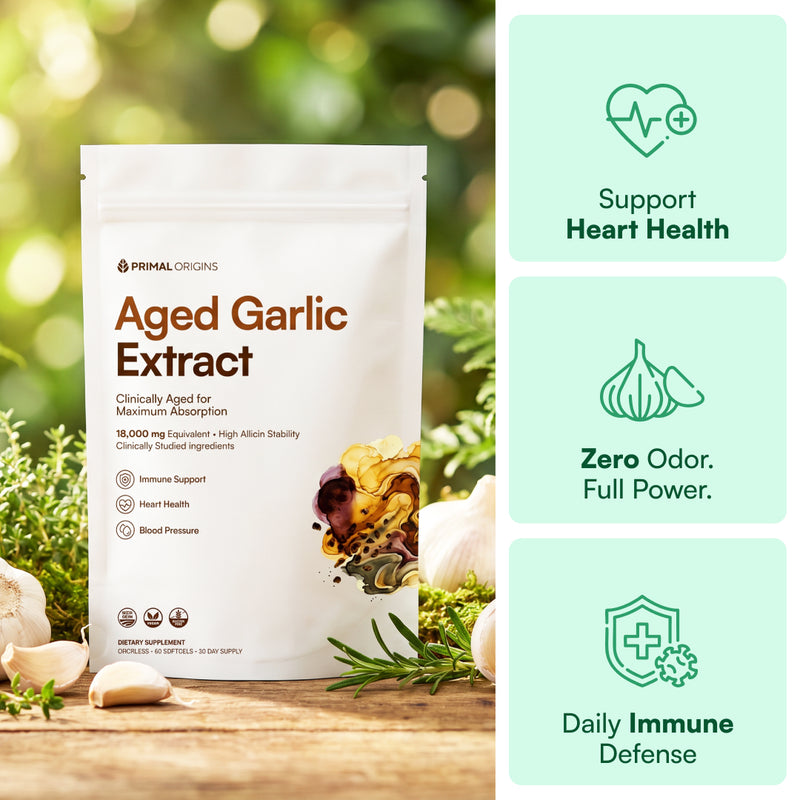
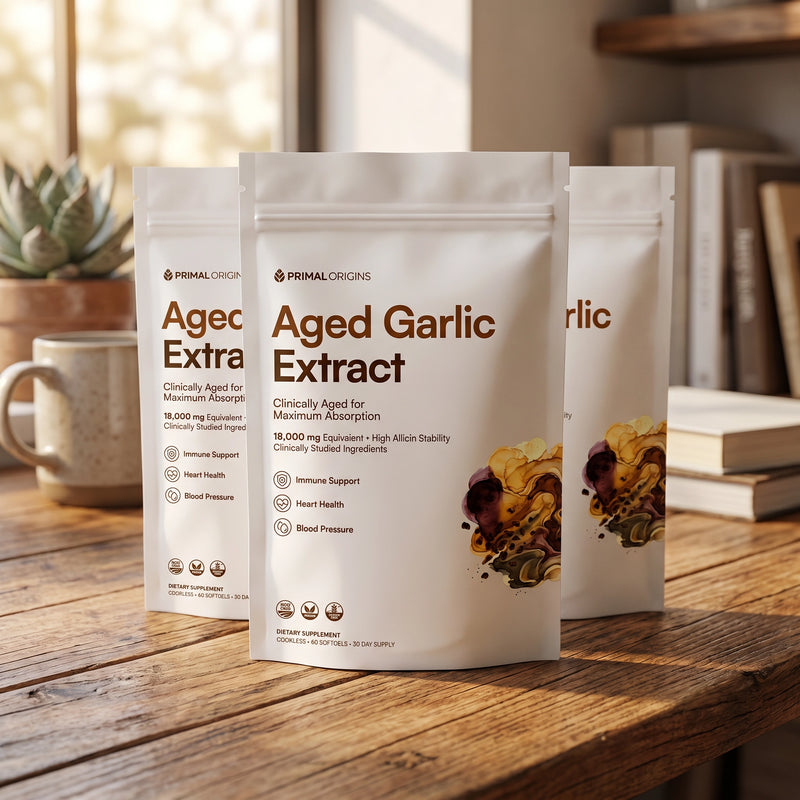
It’s called Primal Origins Aged Garlic. Built around one stubborn idea: don’t cut the eighteen months.

Primal Origins Aged Garlic

“I called more than a dozen supplement manufacturers before one was willing to wait the full eighteen months. Most treated it like a strange request — six months was their standard, twelve was already a stretch. Eighteen months ties up too much capital. I kept calling. The shorter cycles don’t produce the SAC content the cardiology research is based on. There wasn’t another way to do it honestly.”

— James Holloway, Founder, Primal Origins

Each batch takes 18 months to mature before it can be extracted, tested, and bottled. There’s no marketing trick to that. It’s simply the time SAC needs to form.

The bottles available right now were started in 2024. When this run sells through, the next finishes maturation later this year.

We’d rather wait than ship a younger product just to keep the shelves full.

3rd-Party Tested

Independent purity & potency labs

Made in the USA

GMP-certified facility

18+ Month Aged

No shortcuts, no fillers

Try The 18-Month Aged Formula

60-day money-back guarantee · Free US shipping · Limited current batch

Real People, Real Results

"

I’m 58, and the swelling in my ankles by 6 PM was something I’d just accepted. Three months in, my socks don’t leave a mark anymore.

Robert K. | Verified Buyer

Individual results may vary.

"

My hands used to ache the second the AC came on. I noticed I just… stopped reaching for the heating pad. That alone was worth it.

Patricia M. | Verified Buyer

Individual results may vary.

"

What surprised me was the headaches. I assumed they were stress. They quietly faded over a few weeks. I didn’t even connect the dots until my wife pointed it out.

James T. | Verified Buyer

Individual results may vary.

What To Expect When You Start

Here’s the honest part: cardiovascular work doesn’t happen overnight.

The plaque inside your arteries took years to build. The body’s repair systems work on a slower clock than “before-and-after photo” supplements would have you believe.

That said, most people who start a daily aged-garlic routine notice something shifting within the first month. The deeper structural support is what builds across the months that follow:

Week 1–2

Subtle daily shifts

Many people first notice less afternoon fatigue and slightly warmer hands by the end of the second week.

Week 3–6

Visible, day-to-day changes

End-of-day ankle swelling tends to ease, the post-meal heaviness softens, and that low-grade headache load lifts.

Month 3+

Deeper structural support

This is the window the cardiology trials measured — sustained daily SAC, helping the body protect arterial walls over time.

Start your 60 days, fully covered

If you don’t feel a difference within 60 days, send it back. No questions, full refund.

Start The 60 Days

Your Arteries Don’t Send Signals Twice

The signs you keep noticing — swollen ankles at 7 PM, hands that won’t warm up, the numb leg, the headaches you blamed on stress.

Those are what your body can show you. The harder things, the ones happening underneath, it can’t.

Every month you wait, the math doesn’t pause:

  • Plaque keeps building
  • Symptoms keep widening
  • Recovery takes longer
  • And it’s still silent

Now imagine the alternative.

You take your shoes off at the end of the day and your socks don’t leave a mark. You shake someone’s hand and yours are warm. You stand up from your desk without that pins-and-needles surge in your calf. The headache you used to “just live with” quietly stops being part of your day.

That isn’t a fantasy. That’s what most people who stick with a daily aged-garlic routine for a few months end up describing. Not dramatic. Just… noticeably better.

With vs. without daily aged garlic

The hardest part of caring about something silent is that nobody comes to tap you on the shoulder.

Plaque doesn’t ring a bell. It just adds another year.

The first time most people get told, they’re already in a hospital gown. By then, the cardiologist’s options are very different from “take this once a day for six months and see what happens.”

What Jennifer Decided

Jennifer thought about it for a week. She’d already spent more than a thousand dollars on copays, two cardiology consults, and a handful of supplements that promised something. The bottle came with a sixty-day guarantee. She did the math out loud to her husband.

“Worst case,” she said, “I’m out shipping.”

I told myself: if it does what these UCLA studies say it does, that’s worth showing up for every morning. And if it doesn’t, I’ll know in two months.

What she didn’t expect was how quietly the changes arrived.

Around the third week, she pulled off her socks one night and noticed the imprint was gone. She didn’t even mention it — assumed it was a fluke. By six weeks, her husband was the one who pointed it out: she hadn’t been reaching for the heating pad in the truck cab anymore. Around three months, the 3 PM headaches she’d written off as “the work” simply stopped being part of her day. She kept the standing 3 PM coffee alarm on her phone for two more weeks before she finally turned it off.

I stand up from the truck and my legs are just legs again. I didn’t realize how much of every day was that low-grade discomfort until it stopped.

Individual results may vary. Jennifer’s experience reflects her own. Primal Origins Aged Garlic is a dietary supplement and is not intended to diagnose, treat, cure, or prevent any disease.

You Decide What The Next Decade Looks Like

The signs you keep noticing are what your body can show you. The harder things — the ones happening underneath — it can’t.

Eighteen months from now, one of two things will be true.

Either you’ll be a year and a half deeper into the buildup. Or six full months into giving your body the one daily input the cardiology research keeps pointing to.

The math is real either way.

60-day money-back guarantee.

Take it daily for sixty days. If you’re not noticing a difference — your ankles, your hands, the headache load you’ve been writing off — send the bottle back. Even empty. We refund every dollar.

No restocking fees. No questions. No follow-up emails.

Your arteries don’t ring a bell — and the first warning is usually the last one.

Primal Origins Aged Garlic — slow-matured 18 months, standardized SAC, third-party tested, GMP-certified, made in the USA. The aged-garlic formula built around the same compound the cardiology research is actually based on. Less than the cost of a single cardiology copay, with a 60-day guarantee that pays for itself if you don’t feel a difference.

This is a paid advertorial and is not an actual news article.

References

  1. Budoff MJ, et al. Inhibiting progression of coronary calcification using Aged Garlic Extract in patients receiving statin therapy. Preventive Medicine, 2009.

  2. Zeb I, Ahmadi N, Nasir K, et al. Aged garlic extract and coenzyme Q10 have favorable effect on inflammatory markers and coronary atherosclerosis progression: A randomized clinical trial. Journal of Cardiovascular Disease Research, 2012.

  3. Matsumoto S, et al. Aged Garlic Extract reduces low attenuation plaque in coronary arteries of patients with metabolic syndrome in a prospective randomized double-blind study. Journal of Nutrition, 2016.

  4. McCarty MF. Coronary artery calcium and the role of aged garlic extract in arterial protection (review). Open Heart, 2018.

  5. Hodis HN, et al. Long-term cohort data on coronary artery calcium imaging and the natural history of subclinical atherosclerosis (multiple cohort summaries).

† These statements have not been evaluated by the Food and Drug Administration. This product is not intended to diagnose, treat, cure, or prevent any disease.

The clinical research referenced on this page evaluated aged garlic extract as an ingredient and was not conducted on Primal Origins Aged Garlic specifically. Customer testimonials reflect individual experiences and are not typical results. Always consult a qualified healthcare professional before starting any new supplement, especially if you are on prescription medications such as blood thinners or statins.